

A woman who developed an eco-friendly deodorant while being treated for breast cancer has had her product fast tracked with the help of a programme at Lancaster University.
Laura Meehan has designed a 100% sustainable refillable cartridge made of cork, with the help of Lancaster University through its Low Carbon Eco-Innovatory (LCEI) programme.
Her startup, Let’s Rethink This, has developed a product called Nada, and is aiming to improve on current brands on the market which use metal and plastic.
The design, a spherical dome case containing a refillable deodorant core, won a design award through the WORTH Partnership Project and secured funding to support product development, as well as an opportunity to demonstrate the innovation at the Salone del Mobile during Milan Design Week from April 18-23.
Mum-of-three Laura came up with the idea in 2021 after she was treated for breast cancer.
“I was trying to avoid exposure to certain chemicals so I started to use more natural products,” she said.
“But while I was scrutinising what was available in the market I uncovered a lot of greenwashing with claims certain packaging is recyclable when in reality it isn’t.”
With a talent for design that saw her previously win an award for a children’s product, Laura put pen to paper and set about developing a design for a refillable cartridge made of cork.
“The cork tree is the only tree which can regenerate after each harvest of bark,” Laura explained.
“It’s a remarkable thing. So it seems the perfect basis for a product that biodegrades with less impact on the environment.”
But Laura then needed support to formulate a deodorant core so it fit snugly in the dome case.
Through LCEI, a programme which helps small businesses develop low-carbon innovations, Laura was given fully funded access to cutting edge chemistry and engineering facilities and researchers from Lancaster University.
“Working with the university has brought many benefits,” Laura said. “The bottom line is that every stage of developing a new product, especially one as different as mine, takes a lot of resources. That is time and money I simply didn't have. The LCEI programme has overcome that barrier and given me access to very clever people with expertise in turning my idea into something tangible.
“The support has de-risked the development process and accelerated my journey significantly. The experience of working with the university has given me so much confidence and self-belief in this product. It has also opened my eyes to what a valuable research and development resource universities like Lancaster are.”
With a prototype in her hands, Laura is in discussions with manufacturers, exploring fragrance options and looking for investment.
“We should be at the point of civilization when the presumption is that the products we use are not going to harm us or anyone else,” Laura said. “We need to rethink how we make our products and what we make them with, and stop putting the responsibility on consumers all the time.
“I have been starting from scratch, rethinking the process, being realistic with what technology has to offer so far but putting honesty at the heart of every decision.
Let’s Rethink This is one of 28 companies that collaborated with Lancaster University as part of LCEI with a variety of aims such as testing a new product, delivering market research, reviewing a business process or analysing the carbon footprint.
Carolyn Hayes, LCEI Project Manager at Lancaster University, said: “One of the biggest challenges small businesses and charities have is the lack of resources, such as personnel, knowledge and time, to devote to starting their net zero journey.
“The LCEI programme offered access to the skills and expertise of undergraduates, postgraduates and world-renowned academics, leveraging our plethora of world-class facilities, to identify a bespoke course of action. It helped businesses to rethink their carbon footprint and energy consumption, and encouraged them to be prepared for situations like our current energy crisis.”
LCEI was part funded by the European Regional Development Fund (ERDF), and involved a consortium including Liverpool John Moores University (LJMU) and the University of Liverpool.

 UPDATED: Police put 48 hour dispersal order in place after arrests on Lancaster estate
 Eden Project Morecambe Hub set to open as start of work on site draws closer
 Morecambe BID gets overwhelming backing to continue for another five years
 Forces veteran launches campaign to stop demolition of former Morecambe bus shelter
 LISTEN: "A thriving Winter Gardens benefits Morecambe"
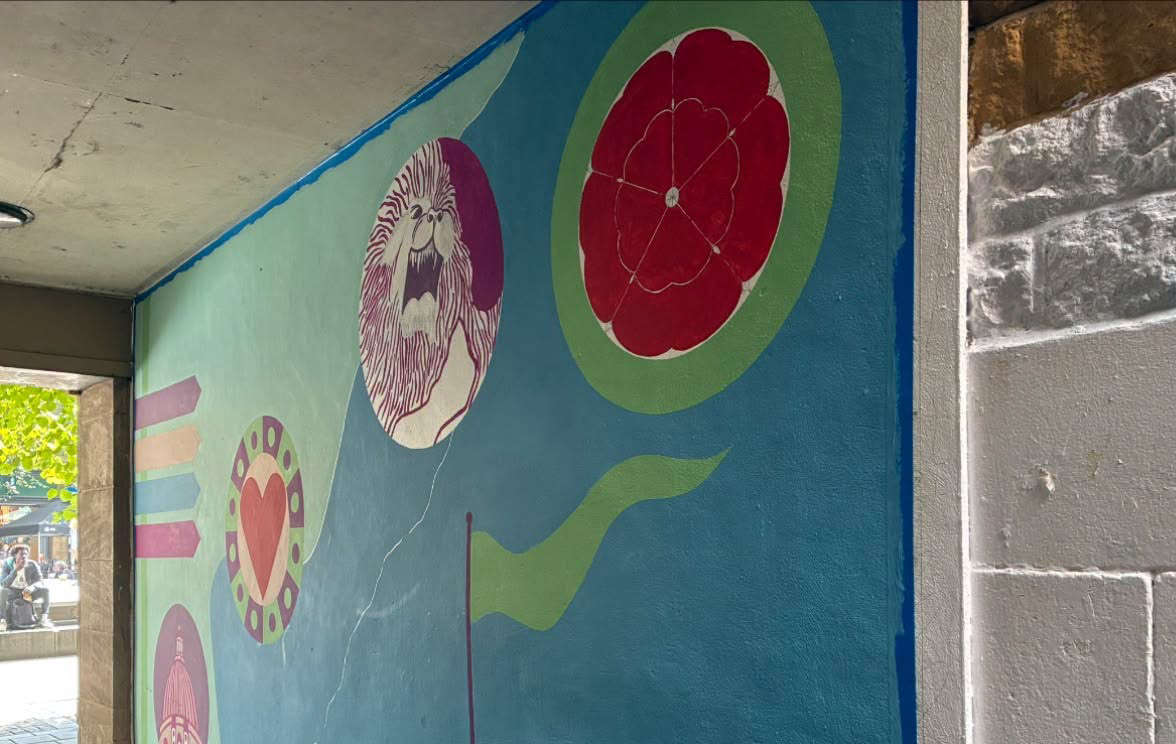 New mural unveiled to brighten up crime hot-spot in Lancaster city centre
 New upgrades unveiled at cherished Lancaster woodland
 Silverdale holiday park celebrates Cumbria Tourism award success
 'Exceptional' Ofsted report for Lancaster school-based teacher trainers
 Morecambe lifeboat crew called out to people watching eclipse
 PHOTOS: Once in a generation solar eclipse delights people across Lancaster and Morecambe Bay
 Government housing inspectors tell Lancaster City Council that improvement is needed
 Morecambe FC censured by football regulator
 New Indian restaurant opening soon in Lancaster
 Investigation after fire in touring caravan on Promenade in Morecambe
 Lancaster and Morecambe Bay area prepares for best eclipse for a quarter of a century
 Heartbreak over state of eyesore former Lancaster pub as council takes action
 Street Champions campaign launched in West End of Morecambe
 First glimpse of 'Realm of the Moon' as new Eden Project Morecambe hub set to officially open
 Lancaster festival returns to raise funds for mental health awareness